When preparing a vacant home for the market, vendors are faced with a definitive choice: invest in professional physical staging, opt for the cheaper shortcut of virtual staging, or leave the property completely empty.
At first glance, leaving a home empty costs nothing, and virtual staging costs very little. On a computer screen, a few digital sofas can look like a convenient fix. But real estate marketing isn't just about showing the layout of a room—it is about selling a lifestyle. It is about creating an immediate, undeniable emotional connection the moment a buyer steps through the door.
While an empty house offers no lifestyle vision, and virtual staging offers a false one, physical staging bridges the gap between online interest and an in-person premium sale. The reality changes completely the second a buyer crosses the threshold.
The E-Commerce Exception
We live in an era where almost everything has moved online. We comfortably buy clothing, cars, and everyday investments without ever touching or seeing them in person. But real estate remains the great exception.
Buying a home is still very much an in-person, open-home, viewings-driven market. It is a high-stakes, deeply personal decision. Until technology evolves to the point where virtual walkthroughs from the comfort of a couch feel 100% real, property decisions will always be won or lost on the showroom floor.
Because the transaction relies so heavily on that physical visit, relying on an empty canvas or a digital illusion online can severely backfire. Here is why.
1. The Expectation Gap
The ultimate goal of marketing a home online is to get buyers to visit the property in person. Virtual staging can certainly achieve that initial click, but it creates a distinct gap between expectation and reality.
When a buyer falls in love with a warm, beautifully styled home on their screen, only to walk into an empty, echoing house in person, that initial connection is lost. Instead of feeling instantly welcomed and inspired the moment they step through the front door, they are met with a stark contrast between expectation and reality.
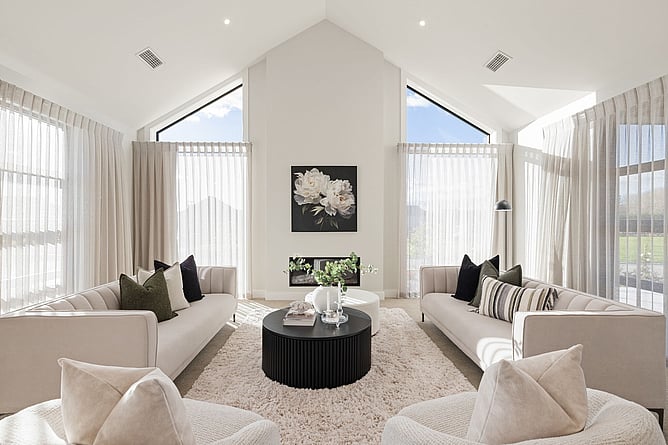
When a property is physically staged, it creates an inviting experience that allows buyers to focus on the lifestyle. In an existing home, intentional styling naturally draws the eye to the positive aspects of the property rather than its older features. In a new build, real furniture adds the essential texture and personality that helps buyers connect with the space.
Without physical staging, a vacant home makes it incredibly difficult for buyers to visualise the actual size of a room. They are left to guess whether their dining table will fit, or if a bedroom can comfortably accommodate a queen bed. Instead of feeling the space, they begin to analyse it—focusing their attention on minor wall marks, floor imperfections, or simply how empty the rooms feel.
2. Digital Scale vs. Spatial Honesty
Virtual staging can sometimes distort the true proportions of a room. It is relatively easy for a digital rendering to adjust the size of a sofa or scale down a dining table, making a compact space appear larger on a screen than it is in reality.
Physical staging brings spatial honesty to a property. Instead of leaving spaces completely bare, or using a generic, one-size-fits-all approach to furniture, professional staging relies on considered, intentional design. It is about selecting appropriately sized pieces and tailored styling items that complement the architecture and let the space breathe. When a buyer can physically see how a queen bed fits into a bedroom with plenty of walking room, or how a lounge suite beautifully defines an open-plan living area, any uncertainty disappears. They don't have to guess whether their lifestyle fits the floor plan; they can see it working right in front of them.
3. Creating an Emotional Connection
The vast majority of buyers looking to purchase a home start with a practical checklist—narrowing down their search based on their specific non-negotiables, whether that is location, budget, or bedroom count. However, once a property ticks those essential boxes and the buyer steps through the door, the final decision relies heavily on a feeling. While some new home buyers are perfectly comfortable purchasing off a plan, most people need to walk into a space and physically experience it to truly envisage their future there.
Virtual staging simply does not translate to the buyer experience when they attend an open home. A digital image cannot provide the physical reference points a buyer needs when standing in an empty room. Without real furniture in the space, it is incredibly difficult to accurately judge the scale, understand the layout, or feel the true atmosphere of the property.
Physical staging invites a buyer to linger and interact with the space. It allows them to see exactly how a room functions, appreciate the natural flow of the layout, and confidently picture how their own life would fit. An empty house can feel cold and transient; a professionally styled house feels like a home ready to be lived in.
4. The True Cost of Cheap Shortcuts
Choosing virtual staging or leaving a home completely empty to save on upfront costs is often a false economy. If a property sits on the market for weeks because empty viewings are failing to convert initial interest into serious offers, a vendor will inevitably face the prospect of a price reduction.
In the New Zealand market, a single price drop of $10,000, $20,000, or more completely dwarfs the initial investment of a professional physical stage.
Beautifully presented homes stand out. When a property is physically staged with modern, premium furniture, it signals to buyers that the home is a quality asset. It builds genuine interest, justifies the asking price, and drives faster results.
The Bottom Line
Virtual staging is a tool designed for a digital screen. Physical staging is an investment in the final sale price.
If you want to capture a buyer's attention online and secure their emotional commitment the moment they walk through the door, there is simply no substitute for the real thing.